Home
Home
Does Walking Build Muscle? Here Is How to Actually See Results From Your Steps
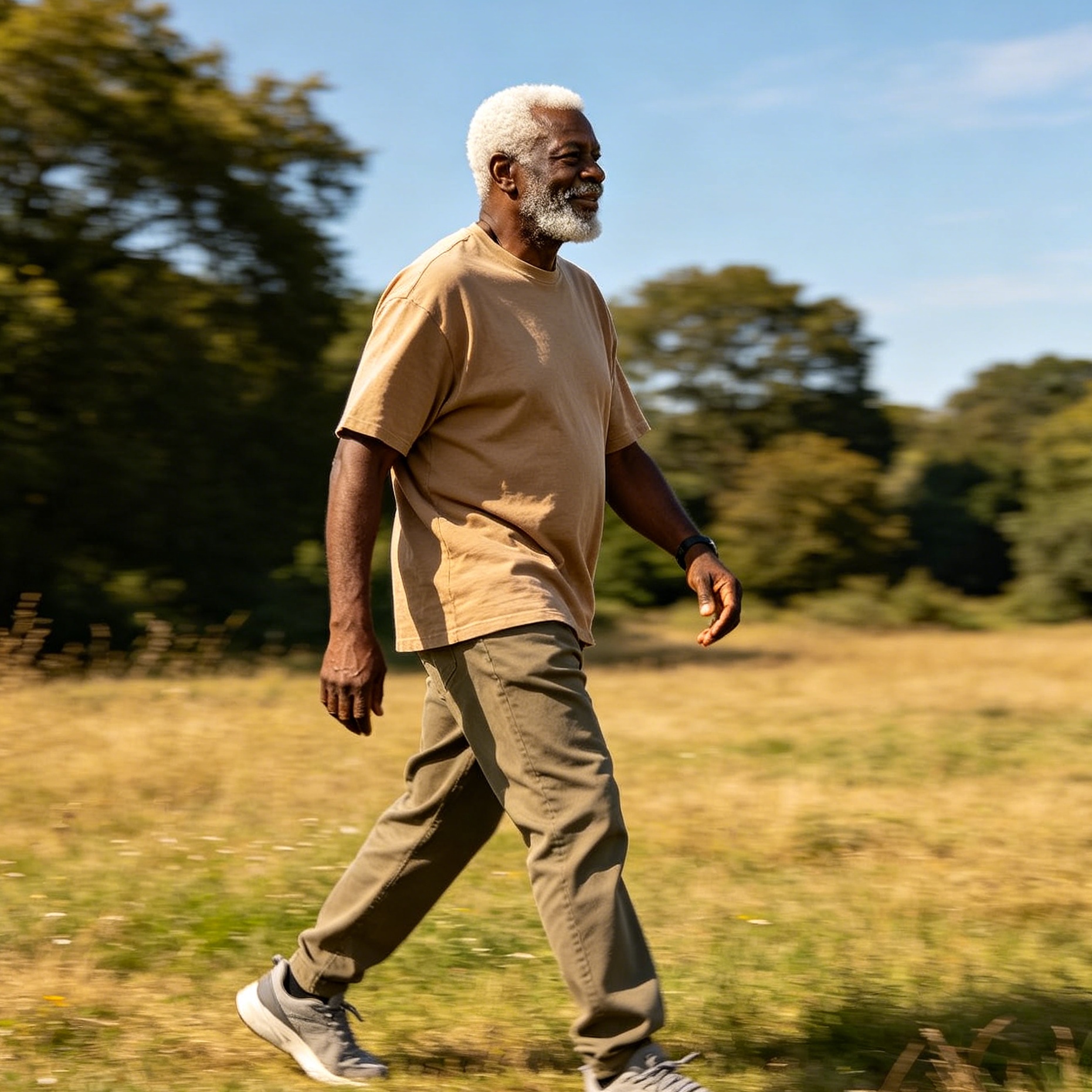
Walking is often categorized strictly as a cardiovascular activity, a low-intensity steady-state (LISS) exercise designed to burn calories and improve heart health. However, the question of whether walking can actually build muscle mass involves a more nuanced exploration of exercise physiology, biomechanics, and the principle of progressive overload. While a casual stroll in the park will not yield the same hypertrophy as a heavy squat session, specific types of walking—under specific conditions—can indeed stimulate muscle growth, particularly in the lower body.
The Physiology of Muscle Growth and Walking
To understand if walking builds muscle, one must first look at how muscle growth, or hypertrophy, occurs. Hypertrophy requires three primary triggers: mechanical tension, metabolic stress, and muscle damage. Traditional resistance training achieves this by subjecting muscle fibers to loads that exceed their current capacity, forcing them to repair and grow stronger.
Walking primarily activates Type I muscle fibers, also known as slow-twitch fibers. These fibers are designed for endurance and are highly resistant to fatigue. They are efficient at using oxygen to generate fuel (ATP) for continuous, extended muscle contractions. In contrast, Type II muscle fibers (fast-twitch) are responsible for power and significant size increases. Because standard walking on flat ground does not typically provide enough mechanical tension to recruit a high percentage of Type II fibers, the potential for massive muscle size increases is limited compared to weightlifting.
However, for individuals who have been largely sedentary, the transition from inactivity to regular walking provides a sufficient stimulus to trigger initial muscle adaptation. In these cases, walking acts as a form of resistance training against gravity and the individual's own body weight, leading to noticeable improvements in muscle tone and functional strength.
Which Muscles Are Targeted During Walking?
Walking is a complex, total-body movement, though the primary workload is distributed across the lower kinetic chain. Understanding the anatomy of a stride helps in identifying which areas will see the most development.
The Posterior Chain: Glutes and Hamstrings
The gluteus maximus, medius, and minimus are crucial for stabilizing the pelvis and propelling the body forward. During the "push-off" phase of a step, the glutes and hamstrings work in tandem to extend the hip. If the walking surface involves an incline, the activation of the gluteal muscles increases significantly to overcome the added resistance of gravity.
The Quadriceps
Located on the front of the thigh, the quadriceps are responsible for extending the knee. They play a vital role during the "swing phase" of walking and help absorb the impact when the foot hits the ground. Walking downhill or downstairs places an eccentric load on the quads, which is a powerful driver for muscle strengthening.
The Calves (Gastrocnemius and Soleus)
The calf muscles are perhaps the most utilized during walking. They are responsible for plantarflexion—the action of pushing off the ground with the toes. Consistent walking, especially on uneven terrain, can lead to increased definition and endurance in the calves.
The Core and Stabilizers
Maintaining an upright posture requires constant engagement of the rectus abdominis, obliques, and erector spinae. While walking won't build a "six-pack" in the traditional sense, it strengthens the deep stabilizing muscles that support the spine and improve balance.
Does Your Current Fitness Level Matter?
The effectiveness of walking as a muscle-building tool is highly dependent on a person's baseline. Fitness is relative; what constitutes a challenging load for one person may be a recovery activity for another.
For a sedentary individual or someone recovering from an injury, walking represents a significant increase in volume and intensity. In this demographic, walking can lead to measurable hypertrophy in the legs and calves. As the body adapts, however, the growth will plateau unless the stimulus is increased.
For an active athlete or someone who regularly performs strength training, flat-ground walking serves better as a tool for active recovery or cardiovascular health. To build muscle, these individuals must manipulate variables such as resistance, incline, and intensity to push the body beyond its comfort zone.
5 Strategies to Build Muscle While Walking
If the goal is to maximize muscle engagement and stimulate growth through walking, simply increasing the step count is usually insufficient. Instead, focus on these five advanced strategies to turn a stroll into a muscle-building workout.
1. Master the Incline
Incline walking is the most effective way to bridge the gap between cardio and strength training. When walking on a hill or a treadmill set to a high grade, the biomechanical demand shifts. The glutes and hamstrings must work much harder to pull the body upward against gravity.
Research suggests that walking at a 10% to 12% incline can increase muscle activation in the lower body by over 50% compared to flat-ground walking. This creates the mechanical tension necessary for Type II fiber recruitment. For the best results, avoid holding onto the treadmill handrails, as this reduces the workload on the legs and core.
2. The Power of Rucking (Weighted Walking)
Rucking involves carrying a weighted backpack (or rucksack) over a distance. This technique, rooted in military training, transforms walking into a full-body resistance exercise. By adding 10% to 20% of your body weight to a pack, you increase the gravitational force on every muscle in your lower body.
Rucking targets the traps and shoulders (due to the straps), the core (to stabilize the weight), and the entire leg assembly. It provides the "progressive overload" that standard walking lacks. As you get stronger, you can incrementally add weight, ensuring the muscles never fully settle into a state of ease.
3. Incorporate High-Intensity Intervals (HIIT)
Speed is a critical variable in muscle recruitment. Power walking or brisk walking forces the muscles to contract more rapidly and with more force. By alternating between 60 seconds of maximal-effort walking and 60 seconds of moderate recovery, you can induce metabolic stress.
Faster walking speeds increase the "ground reaction force," meaning your muscles have to absorb and generate more power with each step. This higher impact, while still relatively low compared to running, helps in strengthening the bone density and the connective tissues surrounding the muscles.
4. Traverse Uneven Terrain
Sidewalks are predictable and require minimal lateral stabilization. In contrast, hiking on trails, sand, or rocky paths forces the smaller, stabilizing muscles in the ankles, knees, and hips to engage. The constant need for balance adjustments activates the medial glutes and the deep core muscles in ways that flat surfaces cannot. This lateral and rotational demand builds a more comprehensive and resilient muscular structure.
5. Utilize Nordic Walking Poles
Adding poles to your walking routine engages the upper body. By pushing off the ground with poles, you involve the triceps, latissimus dorsi, and deltoids. This turns a lower-body focused movement into a total-body workout. While it may not result in massive upper-body hypertrophy, it increases the total energy expenditure and improves muscular endurance across the entire frame.
The Role of Nutrition in Walking-Based Muscle Growth
No amount of walking will build muscle if the body is in a state of chronic nutritional deficiency. Muscle hypertrophy is an energy-intensive process that requires two critical components: a caloric surplus (or at least maintenance) and adequate protein intake.
Protein Intake
Protein provides the amino acids necessary for repairing the micro-tears caused by exercise. For those looking to gain or maintain muscle while walking, consuming between 1.2 to 1.7 grams of protein per kilogram of body weight is a generally accepted benchmark. Without sufficient protein, the body may actually break down existing muscle tissue to fuel long-distance walks.
Caloric Balance
Walking is an excellent fat-burner, but if the goal is growth, you must ensure you aren't in too deep of a caloric deficit. If you are burning 500 calories during a long, weighted walk, those calories need to be replaced with high-quality nutrients to support the anabolic (growth) process.
Walking for Longevity: Fighting Sarcopenia
As the body ages, it naturally loses muscle mass, a condition known as sarcopenia. For older adults, walking is one of the most sustainable and effective ways to combat this decline. It maintains the functional strength required for daily activities—standing up from a chair, climbing stairs, and maintaining balance. In this context, "building muscle" isn't about aesthetics; it’s about maintaining the independence and metabolic health that muscle mass provides.
Combining Walking with Traditional Strength Training
For most people, the ideal approach is a hybrid model. Walking should not replace resistance training but rather complement it. Walking on "off-days" from the gym increases blood flow to the muscles, aiding in the removal of metabolic waste and speeding up recovery. This increased circulation helps deliver nutrients to the muscles you worked during your heavy lifting sessions, indirectly supporting growth.
Furthermore, the cardiovascular base built through walking allows you to perform higher-volume weightlifting sessions with less fatigue. A stronger heart and more efficient oxygen delivery system mean you can push harder during your sets of squats or lunges.
Common Myths About Walking and Muscle
Myth 1: Walking will make your legs bulky. This is highly unlikely. Walking, even at an incline, focuses on lean muscle mass and endurance. The "bulky" look requires a specific combination of heavy load lifting and a significant caloric surplus.
Myth 2: You must hit 10,000 steps to see any benefit. While 10,000 steps is a popular goal, quality often beats quantity for muscle building. Thirty minutes of high-incline rucking is far more effective for muscle stimulation than two hours of slow, flat-ground walking.
Myth 3: Walking is "useless" for the upper body. While primarily a leg workout, carrying weights or using Nordic poles involves significant upper-body engagement. Even the act of pumping your arms during a brisk walk helps tone the shoulders and core.
Practical 4-Week Progression Plan
To start building muscle through walking, you can follow a simple progression over four weeks:
- Week 1: Establish a baseline. Walk 30 minutes at a moderate pace on a flat surface 4 times a week.
- Week 2: Introduce intensity. Change 2 of those sessions to include a 5% incline or find a hilly outdoor route.
- Week 3: Add resistance. Wear a backpack with 5-10 lbs of weight. Increase the incline to 8% if on a treadmill.
- Week 4: Maximize stimulus. Perform one session of rucking, one session of high-incline intervals, and one long-duration trail walk.
Summary of Findings
Walking is a versatile tool that sits on a spectrum. At its most basic, it is a restorative, health-boosting activity. At its most intense—involving steep grades, external loads, and high speeds—it becomes a legitimate stimulus for muscle hypertrophy and strength.
While it may not replace the barbell for those seeking maximum size, walking offers a low-impact, accessible way to build a functional, resilient lower body. By strategically manipulating the variables of resistance and incline, any individual can turn their daily steps into a powerful muscle-building habit. Success lies in the progression; the body will only grow if the demand placed upon it continues to evolve.
-
Topic: Does Walking Build Muscle? Here's What You Need to Know About the Low-Impact Workout | The Output by Pelotonhttps://www.onepeloton.com/en-GB/blog/does-walking-build-muscle/
-
Topic: Does Walking Build Muscle?https://www.verywellhealth.com/does-walking-build-muscle-8697222
-
Topic: Does Walking Build Muscle? Trainers Weigh Inhttps://www.womenshealthmag.com/fitness/a70439521/does-walking-build-muscle-trainers-say-yes/